A 48-hour-old boy is evaluated in the newborn nursery on morning rounds. The infant has been breastfeeding exclusively with good latch. He passed meconium yesterday and has urinated several times, but the parents are concerned about his increasing yellow discoloration. He was born at 38 weeks gestation via normal spontaneous vaginal delivery. Review of prenatal records shows a maternal blood type of O+ and normal routine blood testing. Physical examination shows an alert, nondysmorphic boy with a strong suck and intact Moro reflex. He has icteric sclerae and appears jaundiced from head to feet. The abdomen is soft, nontender, and nondistended. The liver is palpable 1 cm below the right costal margin. The examination is otherwise unremarkable. The infant's blood is drawn at 49 hours of life; laboratory results are as follows: 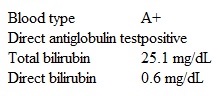 Which of the following is the most appropriate next step in management of this patient?
A) Complete blood count, blood culture, and empiric antibiotic therapy
B) Discontinue breastfeeding and start total parenteral nutrition
C) Gradual removal of the patient's blood and replacement with donor blood
D) Hepatitis B serologies and immunoglobulin therapy
E) Placement near a window for exposure to direct sunlight
Correct Answer:

Verified
Q466: A 4-year-old boy is brought to the
Q467: A 64-year-old man admitted to a rehabilitation
Q468: A 70-year-old woman comes to the office
Q469: A 25-year-old Caucasian man comes to see
Q470: A 54-year-old man with new-onset type 2
Q472: A previously healthy 30-year-old woman is admitted
Q473: A 70-year-old woman comes to the office
Q474: A 58-year-old Caucasian man comes to the office
Q475: A 2-year-old boy is brought to the
Q476: A previously healthy 30-year-old woman is admitted
Unlock this Answer For Free Now!
View this answer and more for free by performing one of the following actions

Scan the QR code to install the App and get 2 free unlocks

Unlock quizzes for free by uploading documents