A 19-year-old woman, gravida 1 para 0, at 10 weeks gestation comes to the emergency room due to sudden-onset nausea, vomiting, and worsening abdominal pain. The nausea and vomiting began 3 days ago and were initially responsive to an over-the-counter antiemetic. However, for the last day, she has been unable to tolerate food and is now unable to tolerate liquids. For the past few hours, the patient has had severe pain in the right upper quadrant. She has not had any sick contacts, hematemesis, diarrhea, changes in stool color, or weight loss. The patient has sickle cell disease and had multiple episodes of dactylitis as a toddler; however, the last acute pain episode requiring hospitalization occurred several years ago. She was on penicillin prophylaxis until age 5 and is taking no daily medications. The patient is up to date on vaccinations. She was treated for trichomoniasis 2 years ago; recent sexually transmitted infection screening was negative. Temperature is 38.3 C (100.9 F) , blood pressure is 140/80 mm Hg, pulse is 88/min, and respirations are 20/min. Pulse oximetry is 98% on room air. BMI is 21 kg/m2. Examination shows darkening of the sclerae. Cardiac examination is normal, and the lungs are clear to auscultation. The right upper quadrant is tender on abdominal examination, but there is no lower abdominal pain, rebound, or guarding. Pelvic examination shows no uterine tenderness. Deep tendon reflexes are 2+. Laboratory results are as follows: 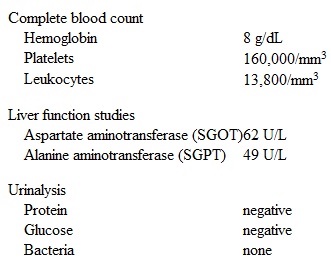 Ultrasound reveals a 10-week intrauterine gestation with fetal cardiac activity. Which of the following is the most likely diagnosis in this patient?
A) Acute fatty liver of pregnancy
B) Acute pyelonephritis
C) Acute sickle hepatic crisis
D) Fitz-Hugh-Curtis syndrome
E) HELLP syndrome
Correct Answer:

Verified
Q830: A 25-year-old woman, gravida 1 para 0
Q831: A 20-year-old woman, gravida 1 para 0,
Q832: A 31-year-old woman, gravida 1 para 0,
Q833: A 29-year-old woman, gravida 1 para 0,
Q834: A 27-year-old woman, gravida 1 para 0,
Q836: A 33-year-old woman, gravida 2 para 1,
Q837: A 32-year-old woman, gravida 2 para 1,
Q838: A 32-year-old woman, gravida 3 para 2,
Q839: A 16-year-old girl, gravida 1 para 0,
Q840: A 36-year-old woman, gravida 6 para 5,
Unlock this Answer For Free Now!
View this answer and more for free by performing one of the following actions

Scan the QR code to install the App and get 2 free unlocks

Unlock quizzes for free by uploading documents