Researchers develop a novel glycopeptide antibiotic similar to vancomycin that is bactericidal against many gram-positive bacteria. From animal studies, they determine that the effective drug dosage is 5 mg/kg/day administered intravenously in divided doses. In a clinical trial, the antibiotic is administered to adult and neonatal patients with gram-positive infections. The drug is found to be effective in adults but not in neonates. During further analysis, plasma concentrations of the drug are measured in both groups, with the results shown in the image below: 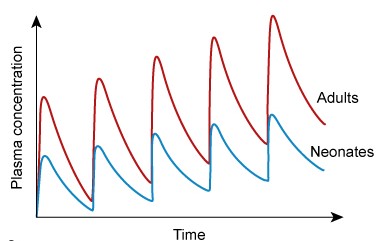 Compared to adults, which of the following neonatal factors is the most likely cause of the difference in drug effectiveness?
A) Decreased cytochrome P450 activity
B) Decreased renal blood flow
C) Elevated plasma protein level
D) High body water content
Correct Answer:

Verified
Q214: A 64-year-old man visits the office after
Q215: As possible vasoconstrictors, three alpha-agonist medications are
Q216: A40-year-old man has been diagnosed with seizure
Q217: The anesthetic medication propofol's pharmacokinetic characteristics are
Q218: A 21-year-old man comes to the physician
Q220: A 19-year-old man comes to the physician
Q221: A medical student is watching a pharmacology
Q222: A 20-year-old woman comes to the physician
Q223: A 55-year-old man visits the clinic owing
Q224: A 20-year-old woman comes to the physician
Unlock this Answer For Free Now!
View this answer and more for free by performing one of the following actions

Scan the QR code to install the App and get 2 free unlocks

Unlock quizzes for free by uploading documents