A 40-year-old man comes to the emergency department due to severe headache associated with photophobia and nausea for the past several hours. The patient reports mild cold symptoms a week ago. He has a 2-year history of hypertension and has smoked a pack of cigarettes daily for 15 years. His father died of stroke at the age of 75. Temperature is 37.7 C (100 F) , blood pressure is 170/100 mm Hg, and pulse is 92/min and regular. He appears to be uncomfortable and had an episode of nonbilious vomiting in the emergency department. Neurologic examination shows 4/5 motor strength and 2+ deep tendon reflexes bilaterally in the upper and lower extremities. Sensation to light touch and pinprick is normal. CT scan of the head without contrast is shown below. 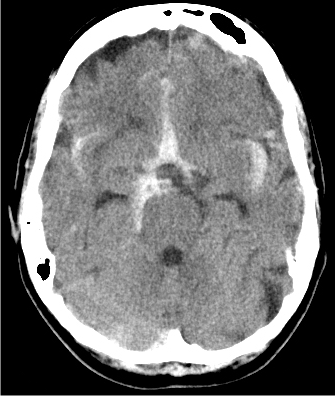 Which of the following is the most likely cause of this patient's headache?
A) Amyloid angiopathy
B) Aseptic meningitis
C) Cerebral arteriovenous malformation
D) Cerebral venous thrombosis
E) Hypertensive encephalopathy
F) Ruptured berry aneurysm
G) Vertebral artery dissection
Correct Answer:

Verified
Q205: A 25-year-old woman comes to the office
Q206: A 32-year-old woman is brought to the
Q207: An 84-year-old woman is brought to the
Q208: A 48-year-old man comes to the emergency
Q209: A 68-year-old hospitalized man is evaluated for
Q211: A 38-year-old woman comes to the emergency
Q212: A 20-year-old woman comes to the emergency
Q213: A 32-year-old man is brought to the
Q214: A 54-year-old man comes to the office
Q215: A 43-year-old man presents to your office
Unlock this Answer For Free Now!
View this answer and more for free by performing one of the following actions

Scan the QR code to install the App and get 2 free unlocks

Unlock quizzes for free by uploading documents