A 44-year-old man comes to the clinic for evaluation of a "mole." He has a slowly enlarging macule that was first noticed by a sexual partner 6 weeks ago. The lesion has no associated pain or itching, but it has changed in color from pink to violet. On review of systems, he denies fever, night sweats, or urinary symptoms. The patient reports an unintentional weight loss of approximately 8 kg (17.5 lb) over the past year. He was treated for syphilis 2 years ago with long-acting penicillin. Otherwise, his medical history is insignificant. He is not currently taking any medications. The patient has had multiple male sexual partners in the last 20 years and works as a freelance website developer. He does not use tobacco or illicit drugs but drinks alcohol heavily on weekends. Temperature is 37.1 C (98.8 F) , blood pressure is 115/70 mm Hg, pulse is 80/min, and respirations are 14/min. The skin lesion is shown in the image below. 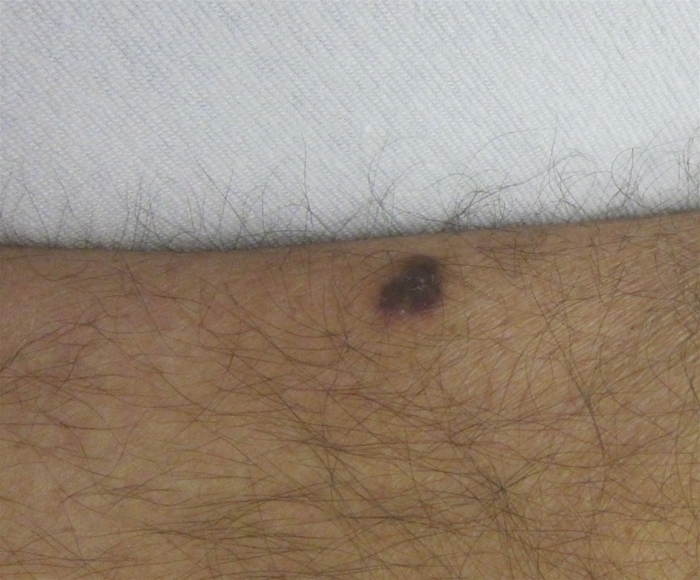 Which of the following is the most likely cause of this patient's skin lesion?
A) Bartonella henselae
B) Cryptococcus neoformans
C) Human herpesvirus 8 (HHV-8)
D) Human papillomavirus
E) Pneumocystis jiroveci
F) Poxvirus
G) Treponema pallidum
Correct Answer:

Verified
Q1288: A 42-year-old man comes to the office
Q1289: A 30-year-old man comes to the office
Q1290: A 19-year-old college student comes to the
Q1291: A 57-year-old man who just returned from
Q1292: A 46-year-old man is brought to the
Q1294: A 46-year-old man comes to the emergency
Q1295: A 19-year-old man comes to the office
Q1296: A 62-year-old man is brought to the
Q1297: A 60-year-old man comes to the emergency
Q1298: A 46-year-old hospitalized man is evaluated for
Unlock this Answer For Free Now!
View this answer and more for free by performing one of the following actions

Scan the QR code to install the App and get 2 free unlocks

Unlock quizzes for free by uploading documents