A 16-year-old kid is sent to the emergency room with significant right groin discomfort that has developed during the last 12 hours. The patient has experienced multiple occurrences of minor scrotal soreness while going between classes at school throughout the previous month. He has no serious injury history and is sexually active. Except for an inguinal hernia corrected a year ago, my medical history is ordinary. The temperature is 36.9 C (98.4 F) , the blood pressure is 116/78 mm Hg, and the pulse rate is 86 beats per minute. The right hemiscrotum is enlarged and painful on inspection. The picture below depicts a bisected gross specimen from an orchiectomy. 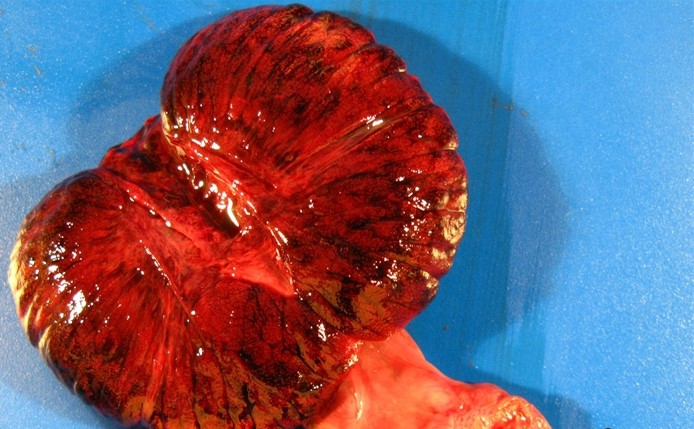 Which of the following is the most likely mechanism of this patient's acute testicular pain?
A) Abnormal collection of fluid within the scrotum
B) Anatomic defect causing increased mobility of the testis
C) Clonal proliferation of testicular germ cells
D) Migration of bacteria from the urinary tract
E) Postsurgical clotting of the pampiniform plexus
Correct Answer:

Verified
Q240: A 25-year-old woman presented to the office
Q241: A 62-year-old man arrives at the emergency
Q242: A 65-year-old man with a history of
Q243: A 28-year-old man arrives at the emergency
Q244: A previously healthy 56-year-old man arrives at
Q246: A 15-year-old girl is being assessed for
Q247: A right-handed 43-year-old woman is assessed in
Q248: A 4-year-old child is brought to the
Q249: A 55-year-old man arrives at the office
Q250: A 12-year-old child is being assessed for
Unlock this Answer For Free Now!
View this answer and more for free by performing one of the following actions

Scan the QR code to install the App and get 2 free unlocks

Unlock quizzes for free by uploading documents