A 17-year-old boy is brought to the physician because of progressive right knee pain for the past 3 months. He reports that the pain is worse at night and while doing sports at school. He has not had any trauma to the knee or any previous problems with his joints. His vital signs are within normal limits. Examination of the right knee shows mild swelling and tenderness without warmth or erythema; the range of motion is limited. X-rays reveal a large lytic lesion involving the proximal tibia with extensive soft-tissue swelling. Histologic examination of the mass is shown in the exhibits. 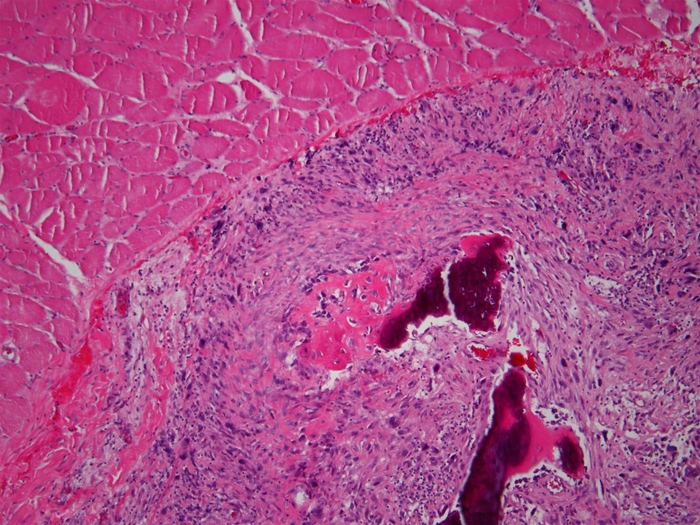
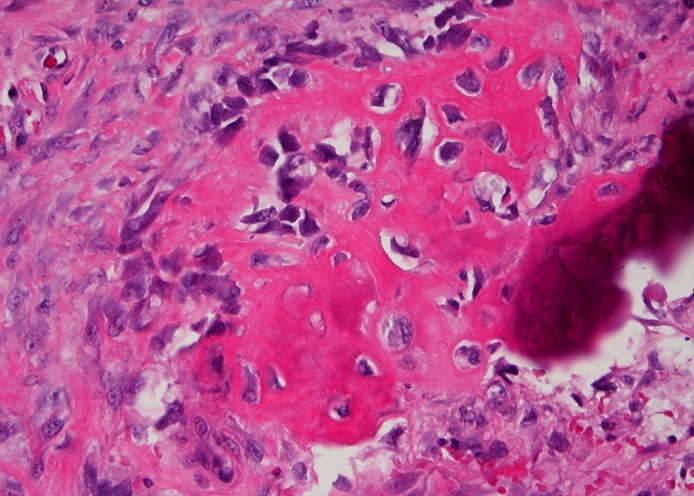
Which of the following is the most likely diagnosis?
A) Chondrosarcoma
B) Ewing sarcoma
C) Metastatic adenocarcinoma
D) Osteoid osteoma
E) Osteosarcoma
Correct Answer:

Verified
Q663: A 64-year-old man comes to the office
Q664: A 13-year-old boy is brought to the
Q665: A 48-year-old previously healthy woman visits the
Q666: An 80-year-old woman is assessed for blisters
Q667: A 10-year-old boy is brought to the
Q669: A 34-year-old woman arrives at the office
Q670: A 64-year-old guy visits the office because
Q671: A 17-year-old boy is brought to the
Q672: A 42-year-old woman is admitted to the
Q673: A 12-year-old child is brought to the
Unlock this Answer For Free Now!
View this answer and more for free by performing one of the following actions

Scan the QR code to install the App and get 2 free unlocks

Unlock quizzes for free by uploading documents