A 17-year-old boy is brought to the emergency department by a friend after he briefly lost consciousness during a workout. He has been spending 3-4 hours of running to prepare for a marathone. He is oriented to person and place, but not time; he appears irritable. His temperature is 40.5°C (104.9°F) , pulse is 118/min, respirations are 24/min, and blood pressure is 95/70 mm Hg. The patient is profusely sweating and is confused. His pupils are equal and reactive to light. Neurologic examination shows no focal findings. Laboratory results are as follows: 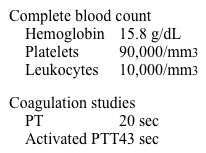 Which of the following sets of hematologic findings is most likely to be present in this patient?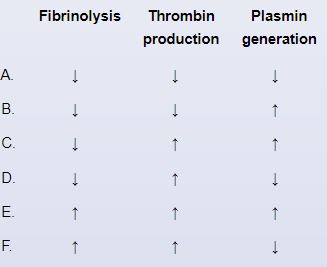
A) A
B) B
C) C
D) D
E) E
F) F
Correct Answer:

Verified
Q666: An 80-year-old woman is assessed for blisters
Q667: A 10-year-old boy is brought to the
Q668: A 17-year-old boy is brought to the
Q669: A 34-year-old woman arrives at the office
Q670: A 64-year-old guy visits the office because
Q672: A 42-year-old woman is admitted to the
Q673: A 12-year-old child is brought to the
Q674: A 71-year-old woman visits the office for
Q675: A 2-year-old kid is brought to the
Q676: A 55-year-old woman with rheumatoid arthritis comes
Unlock this Answer For Free Now!
View this answer and more for free by performing one of the following actions

Scan the QR code to install the App and get 2 free unlocks

Unlock quizzes for free by uploading documents