A 58-year-old woman comes to the physician because of a two-week history of malaise, low-grade fevers, and poor appetite. She was hospitalized one month ago for a complicated urinary tract infection and underwent ureteroscopy due to a distal ureteral stone. Her other medical problems include hypertension, hepatitis C, and chronic lower back pain. Her current medications include hydrochlorothiazide and amlodipine.
Her temperature is 38.0 C (100.4 F) , blood pressure is 120/70 mm Hg, pulse is 88/min, and respirations are 14/min. Physical examination reveals a soft, 2/6 decrescendo-type murmur at the left sternal border. A small petechial lesion is noted on her right big toe.
An EKG shows normal sinus rhythm. Transesophageal echocardiography (TEE) shows a 0.7 cm mobile mass attached to the non-coronary cusp of the aortic valve as well as mild-to-moderate aortic regurgitation. Blood cultures grow Enterococcus faecalis susceptible to ampicillin and gentamicin. Intravenous antibiotics are initiated.
On the fifth day of hospitalization, the patient still complains of malaise. Her temperature is 38.2 C (100.7 F) . Physical examination shows a soft, 2/6 decrescendo-type murmur at the left sternal border, which is unchanged from admission. Repeat EKG is shown in this exhibit. 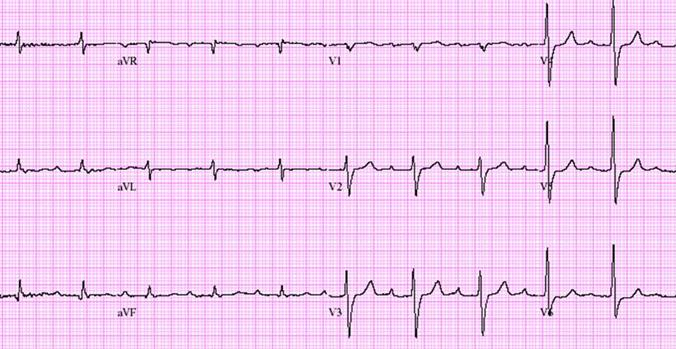
Which of the following is the most likely diagnosis?
A) Drug toxicity
B) Embolism to the coronary artery
C) Pericarditis
D) Perivalvular abscess
E) Sinus node dysfunction
Correct Answer:

Verified
Q30: A 62-year-old woman comes to the office
Q31: A 46-year-old woman comes to the office
Q32: A 57-year-old man comes to the office
Q33: A 20-year-old man comes to the office
Q34: A 56-year-old man comes to the office
Q36: A 67-year-old woman comes to the physician
Q37: A 44-year-old man comes to the physician
Q38: A 77-year-old woman comes to the physician
Q39: A 63-year-old woman is admitted to the
Q40: A 32-year-old paramedic comes to the office
Unlock this Answer For Free Now!
View this answer and more for free by performing one of the following actions

Scan the QR code to install the App and get 2 free unlocks

Unlock quizzes for free by uploading documents