A 43-year-old woman comes to the office due to nausea, vomiting, and intermittent epigastric pain for the last 6 months. Her symptoms have gradually worsened and now she cannot finish a regular meal without feeling full quickly. Although the patient has a decent appetite, she is afraid to eat due to postprandial bloating and heartburn. Fatty foods and salads are particularly bothersome. Consequently, the patient has lost 6.8 kg (15 lb) .
Other medical problems include hypertension, type 1 diabetes mellitus complicated by diabetic nephropathy and neuropathy, hypercholesterolemia, and nonalcoholic fatty liver disease. Medications include insulin glargine, insulin lispro, lisinopril, gabapentin, simvastatin, low-dose aspirin, and ranitidine. The patient has no known drug allergies.
Examination reveals a distended and nontender abdomen with an obvious succussion splash. Rectal examination shows brown stool negative for occult blood.
Laboratory results are as follows: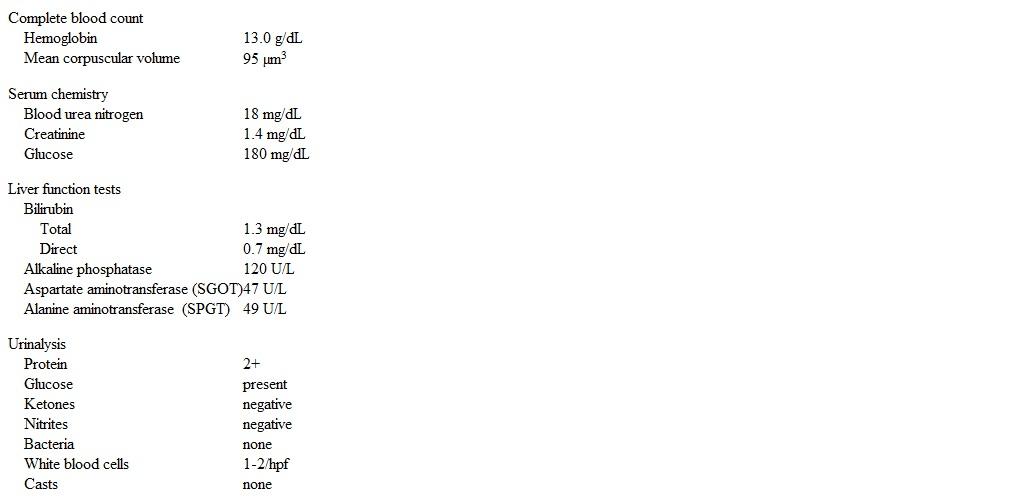 Which of the following is the most appropriate next step in management of this patient?
A) Intensify insulin regimen and re-evaluate in 4-6 weeks
B) Order abdominal ultrasound
C) Perform upper endoscopy
D) Schedule scintigraphic gastric-emptying study
E) Start metoclopramide therapy
Correct Answer:

Verified
Q328: A 65-year-old man is evaluated for a
Q329: A 33-year-old man comes to the office
Q330: A 41-year-old woman comes to the office
Q331: A 78-year-old woman is brought to the
Q332: A 40-year-old woman comes to the clinic
Q334: A 24-year-old man comes to an urgent
Q335: A 56-year-old man comes to the office
Q336: A 24-year-old man is brought to the
Q337: A 65-year-old woman with a known history
Q338: A 46-year-old man comes to the physician
Unlock this Answer For Free Now!
View this answer and more for free by performing one of the following actions

Scan the QR code to install the App and get 2 free unlocks

Unlock quizzes for free by uploading documents