A 40-year-old woman comes to the clinic due to fatigue and generalized weakness for the last 3 months. She has vague, intermittent right upper quadrant abdominal discomfort without pain, nausea, vomiting, or diaphoresis. The patient also reports low back pain and bilateral knee pain. She has had no weight loss or stool changes. Her other medical problems include polycystic ovarian disease, type 2 diabetes, and hyperlipidemia. The patient's menstruations are regular, and she does not use any hormonal contraception. Her medications include glyburide and metformin. She stopped taking a statin due to muscle cramps. The patient drinks 1 or 2 beers (350 mL each) every weekend. Her father was diagnosed with gallbladder carcinoma at age 65. Her mother has hypothyroidism and vitiligo.
Blood pressure is 142/78 mm Hg and pulse is 92/min. BMI is 36 kg/m2. Examination reveals an obese and nontender abdomen. The right knee has mild crepitus. Pinprick sensitivity is decreased below the knees, and the ankle reflex is absent bilaterally.
Laboratory results are as follows: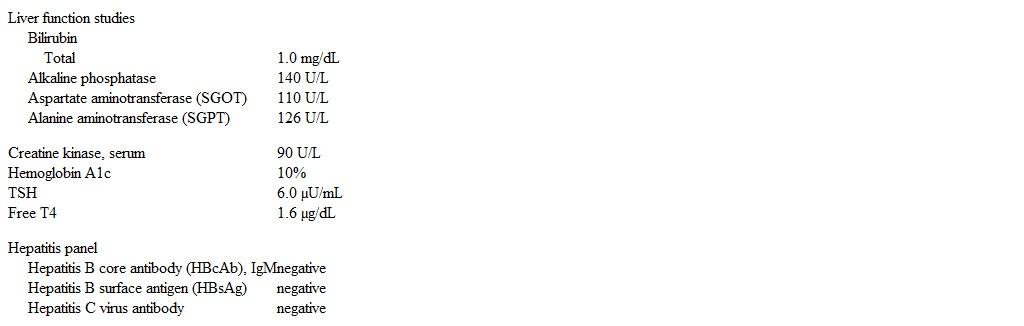 Ultrasonogram shows gallstones and a hyperechoic, enlarged liver with a 16-cm span. There is no gallbladder wall thickening or pericholecystic fluid.
Which of the following would most likely improve this patient's liver condition?
A) Abstinence from alcohol
B) Iron chelation therapy
C) Thyroid hormone replacement
D) Ursodeoxycholic acid
E) Weight loss
Correct Answer:

Verified
Q327: A 76-year-old woman comes to the physician
Q328: A 65-year-old man is evaluated for a
Q329: A 33-year-old man comes to the office
Q330: A 41-year-old woman comes to the office
Q331: A 78-year-old woman is brought to the
Q333: A 43-year-old woman comes to the office
Q334: A 24-year-old man comes to an urgent
Q335: A 56-year-old man comes to the office
Q336: A 24-year-old man is brought to the
Q337: A 65-year-old woman with a known history
Unlock this Answer For Free Now!
View this answer and more for free by performing one of the following actions

Scan the QR code to install the App and get 2 free unlocks

Unlock quizzes for free by uploading documents