A 41-year-old woman comes to the office for a routine follow-up visit. The patient has had malaise and mild abdominal discomfort over the last 3-4 months. Her other medical problems include hypertension, type 2 diabetes mellitus, hyperlipidemia, asthma, and osteoarthritis. The patient also has a history of breast cancer treated with lumpectomy 5 years ago. She smokes a pack of cigarettes daily and drinks 1 or 2 glasses of wine on the weekends. Medications include glyburide, metformin, lisinopril, amlodipine, albuterol, and acetaminophen. The patient stopped taking a statin 2 months ago due to muscle aches.
Blood pressure is 141/78 mm Hg and pulse is 78/min. BMI is 32 kg/m2. There is no jugular venous distension. Bilateral scattered wheezes are heard on expiration. The liver edge is palpated 3 cm below the costal margin. No splenomegaly is present. There is 1+ pitting edema of both ankles.
Laboratory results are as follows: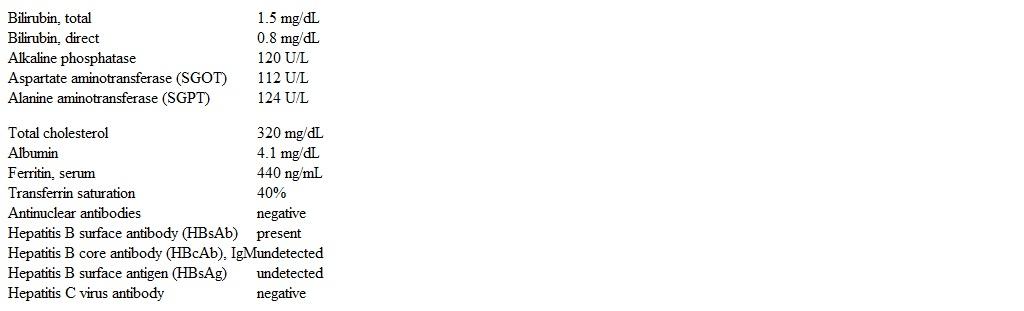 Which of the following is the most likely mechanism of hepatomegaly in this patient?
A) Autoimmune hepatic injury
B) Hepatic iron overload
C) Increased central venous pressure
D) Increased insulin resistance
E) Toxin-induced liver injury
Correct Answer:

Verified
Q325: A 47-year-old woman is evaluated for a
Q326: A 44-year-old woman comes to the office
Q327: A 76-year-old woman comes to the physician
Q328: A 65-year-old man is evaluated for a
Q329: A 33-year-old man comes to the office
Q331: A 78-year-old woman is brought to the
Q332: A 40-year-old woman comes to the clinic
Q333: A 43-year-old woman comes to the office
Q334: A 24-year-old man comes to an urgent
Q335: A 56-year-old man comes to the office
Unlock this Answer For Free Now!
View this answer and more for free by performing one of the following actions

Scan the QR code to install the App and get 2 free unlocks

Unlock quizzes for free by uploading documents