A 53-year-old man comes to the office due to intermittent abdominal pain for the past 6 months. He describes the pain as sharp, located across his mid-abdomen, and relieved with sitting upright. The patient also describes postprandial bloating and discomfort during these episodes. He has observed that the pain is more noticeable shortly after meals. The painful episodes last minutes to hours at a time and then spontaneously resolve. His symptoms are becoming progressively more severe and frequent, but currently he is not experiencing pain. The patient has frequent large, loose stools that require multiple flushes. He reports being hospitalized multiple times in the past for abdominal pain but does not recall a specific diagnosis, and no records of these hospitalizations are available. The patient has no dysphagia, odynophagia, vomiting, black stools, or blood in the stool. He reports a 6.8-kg (15-lb) weight loss over the last 6 months. The patient drinks 4 or 5 bottles of beer daily and occasionally liquor. He does not smoke or use illicit drugs. Medications include over-the-counter antacids and acetaminophen. Temperature is 36.4 C (97.5 F) , pulse is 86/min, blood pressure is 122/78 mm Hg, and respirations are 12/min. BMI is 21 kg/m2. The lungs are clear to auscultation. The abdomen is tender to palpation, but soft and nondistended. There is no rebound tenderness, rigidity, hepatomegaly, or splenomegaly. The remainder of the physical examination is normal. Laboratory results are as follows: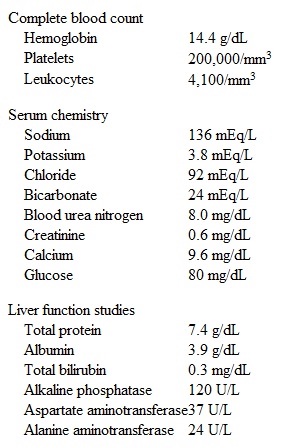
Which of the following tests is most likely to provide the diagnosis?
A) Esophagogastroduodenoscopy
B) Lactose breath hydrogen test
C) Magnetic resonance cholangiopancreatography
D) Serum anti-tissue transglutaminase antibody
E) Serum lipase
Correct Answer:

Verified
Q356: A 45-year-old man comes to the office
Q357: A 3-year-old boy is brought to the
Q358: A 64-year-old woman comes to the office
Q359: A 45-year-old man comes to the clinic
Q360: A 2-year-old boy is brought to the
Q362: A 60-year-old man comes to the physician
Q363: A 54-year-old woman comes to the emergency
Q364: A 3-year-old boy is brought to the
Q365: A 6-week-old boy is brought to the
Q366: A 50-year-old woman comes to the office
Unlock this Answer For Free Now!
View this answer and more for free by performing one of the following actions

Scan the QR code to install the App and get 2 free unlocks

Unlock quizzes for free by uploading documents