A 40-year-old woman comes to the office for follow-up. She received a living-related donor kidney transplant a year ago for membranoproliferative glomerulonephritis. The patient feels well and has been consistent with follow-up and medications. Other medical issues include hypertension and diet-controlled type 2 diabetes mellitus. Current medications include tacrolimus, prednisone, mycophenolate mofetil, lisinopril, and amlodipine, as well as fluconazole for recurrent vaginal candidiasis.
Temperature is 36.9 C (98.4 F) , blood pressure is 152/100 mm Hg, and pulse is 82/min. Physical examination reveals mild cushingoid features. The abdomen is soft with no graft tenderness.
Laboratory results are as follows: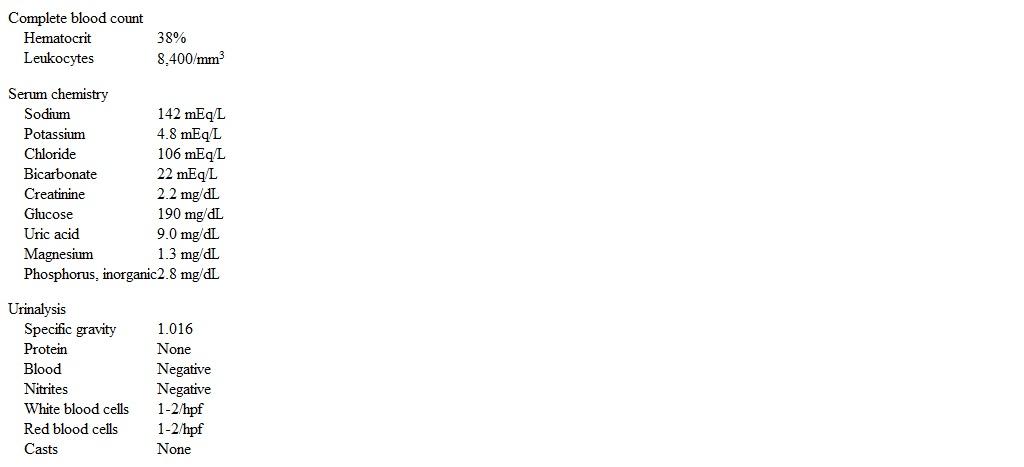 The patient's creatinine was 1.4 mg/dL 3 months ago. Which of the following is the most likely cause of the acute renal dysfunction in this patient?
A) Diabetic nephropathy
B) Graft rejection
C) Hypertensive nephrosclerosis
D) Medication toxicity
E) Recurrence of primary kidney disease
Correct Answer:

Verified
Q768: A 63-year-old woman with a long history
Q769: A 45-year-old man is evaluated for recurrent
Q770: A 45-year-old man comes to the emergency
Q771: A 49-year-old alcoholic man is admitted for
Q772: A 63-year-old man comes to the physician
Q774: A 67-year-old man comes to the physician
Q775: A 36-year-old woman comes to the office
Q776: A 40-year-old man comes to the emergency
Q777: A 28-year-old woman comes to the office
Q778: A 54-year-old woman with end-stage renal disease
Unlock this Answer For Free Now!
View this answer and more for free by performing one of the following actions

Scan the QR code to install the App and get 2 free unlocks

Unlock quizzes for free by uploading documents