A 25-year-old man comes to the office for follow-up. The patient was diagnosed with Graves disease 12 months ago during an evaluation for diarrhea, tremor, and palpitations. He received radioiodine therapy and required initiation of levothyroxine due to iatrogenic hypothyroidism. The patient reports that most of his symptoms have improved with treatment, but he still has occasional diarrhea and fatigue. In addition, his serum TSH levels have remained elevated despite escalating dosages of levothyroxine. The patient takes no other medications and does not use tobacco, alcohol, or illicit drugs. Blood pressure is 130/90 mm Hg and pulse is 64/min. The thyroid is not palpable and skin is mildly dry; otherwise, physical examination is unremarkable. Laboratory results are as follows: 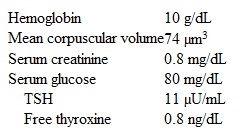 Stool occult blood test is negative. Which of the following is the best next step in management of this patient?
A) Change levothyroxine to liothyronine
B) Check serologies for celiac disease
C) Obtain thyroid uptake scan for ectopic tissue
D) Order MRI of the pituitary
E) Repeat radioiodine treatment
Correct Answer:

Verified
Q369: A 36-year-old man comes to the office
Q370: A 69-year-old man comes to the office
Q371: A 31-year-old man comes to the office
Q372: A 55-year-old man is brought to the
Q373: A 60-year-old man comes to the office
Q375: A 63-year-old man comes to the emergency
Q376: A 45-year-old man is brought to the
Q377: A 43-year-old Chinese-American man comes to the
Q378: A 68-year-old man comes to the emergency
Q379: A 61-year-old man comes to the office
Unlock this Answer For Free Now!
View this answer and more for free by performing one of the following actions

Scan the QR code to install the App and get 2 free unlocks

Unlock quizzes for free by uploading documents