A 26-year-old man comes to the office for a new patient visit. Three months ago, he was seen at an urgent care clinic for excessive thirst and frequent urination. Laboratory evaluation at that time revealed blood glucose of 384 mg/dL, normal anion gap, and hemoglobin A1c of 11.4%. Several medications were prescribed, but the patient was able to afford only regular insulin. He has been taking the insulin before meals, which has improved symptoms. Home fingerstick glucose readings have usually been at 100-300 mg/dL but have dropped as low as 65 mg/dL after he skipped a meal. The patient has complied with a diabetic dietary regimen but sometimes eats "junk food" when busy at work. Medical history is otherwise unremarkable. The patient's mother and sister have hypothyroidism, and his father died at a young age from a motor vehicle collision. There is no family history of diabetes mellitus. The patient is employed as a construction worker and does not use alcohol, tobacco, or illicit drugs. Blood pressure is 127/78 mm Hg and pulse is 76/min. BMI is 24 kg/m2 and waist circumference is 83.8 cm (33 in) . Physical examination, including monofilament testing of the feet, is normal. Laboratory results are as follows: 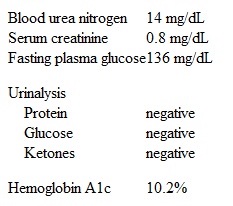 The patient is referred for financial assistance and is now able to afford diabetes-related care. Which of the following is the most appropriate next step in management of this patient?
A) Add metformin
B) Continue current regimen with strict dietary restriction and exercise program
C) Start basal-bolus insulin therapy
D) Start subcutaneous insulin infusion via insulin pump
E) Stop regular insulin and start NPH twice a day
Correct Answer:

Verified
Q222: A 60-year-old woman is transferred from an
Q223: A 64-year-old woman comes to the physician
Q224: A 23-year-old man is hospitalized for acute
Q225: A 29-year-old woman, gravida 1 para 1,
Q226: A 29-year-old woman, gravida 1 para 0,
Q228: A 74-year-old man is brought to the
Q229: A 31-year-old man with diabetes comes to
Q230: A 58-year-old man comes to the physician
Q231: A 64-year-old woman comes to the physician
Q232: A 44-year-old male was found to have
Unlock this Answer For Free Now!
View this answer and more for free by performing one of the following actions

Scan the QR code to install the App and get 2 free unlocks

Unlock quizzes for free by uploading documents