A 31-year-old man with diabetes comes to the emergency department with abdominal discomfort, nausea, and vomiting. He has not felt well for the past 2 days and has had intractable vomiting. The patient stopped taking his regular dose of insulin as he was unable to "hold anything down." His initial laboratory results are positive for serum ketones and show blood glucose of 360 mg/dL. In the emergency department, he is started on intravenous normal saline with potassium and a continuous insulin infusion. Five hours after his admission to the intensive care unit, he feels better. Laboratory results are as follows: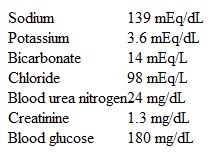 Ten hours after admission, the patient feels better. He has had no vomiting over the last several hours and his abdominal discomfort has subsided. He is tolerating oral fluid. The patient is currently on an insulin infusion and intravenous fluids. Repeat laboratory results are as follows:
 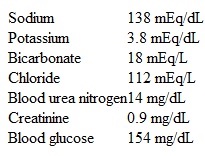 Which of the following is the most appropriate next step in management of this patient?
A) Continue insulin infusion and add bicarbonate to intravenous fluids
B) Give subcutaneous insulin now and stop insulin infusion in 2 hours
C) Gradually taper and stop the insulin infusion over the next 6 hours
D) Stop insulin infusion now and give subcutaneous long-acting insulin
E) Stop insulin infusion now and place the patient on sliding-scale insulin coverage
Correct Answer:

Verified
Q224: A 23-year-old man is hospitalized for acute
Q225: A 29-year-old woman, gravida 1 para 1,
Q226: A 29-year-old woman, gravida 1 para 0,
Q227: A 26-year-old man comes to the office
Q228: A 74-year-old man is brought to the
Q230: A 58-year-old man comes to the physician
Q231: A 64-year-old woman comes to the physician
Q232: A 44-year-old male was found to have
Q233: A 7-year-old boy is brought to the
Q234: A 68-year-old Caucasian female is brought to
Unlock this Answer For Free Now!
View this answer and more for free by performing one of the following actions

Scan the QR code to install the App and get 2 free unlocks

Unlock quizzes for free by uploading documents